Our Commitment
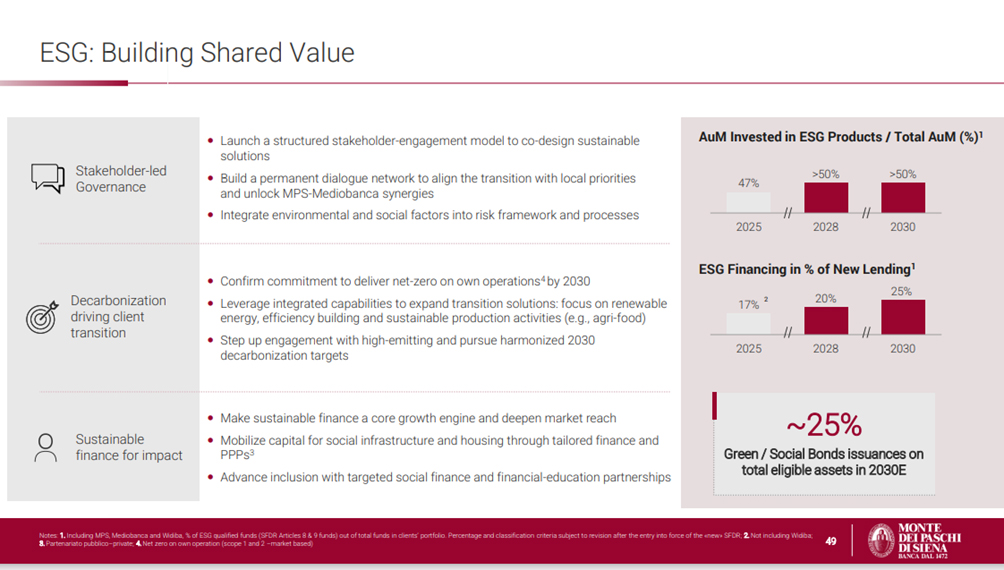
The Group’s ESG strategy is built around three key pillars, aligned with its strategic positioning and its role within the financial system.
E. Decarbonisation and climate transition
The Group reaffirms its commitment to the transition to a low-carbon economy, with the objective of achieving Net Zero for its own emissions (Scope 1 and Scope 2) by 2030, in line with European climate transition guidelines, while contributing to the reduction of financed emissions over the medium to long term.
Our climate strategy is based on:
- energy efficiency measures across buildings, facilities and infrastructure;
- the optimisation and effective use of workplace spaces;
- strengthening our dialogue with customers, particularly those operating in higher-emitting sectors, through engagement initiatives, support for transition plans and tailored financing solutions.
The Group also supports the development of activities and sectors that are essential to the transition, including renewable energy, energy efficiency, the sustainable economy, and strategic value chains such as the agri-food sector.
S. Sustainable finance and the bank’s social role
Sustainable finance is a driver of growth and value creation for the Group. MPS aims to channel capital towards projects and initiatives that generate positive environmental and social impact, strengthening its offering of:
- ESG and green financing solutions;
- tools to support SMEs in their transition;
- investments and products aligned with sustainability criteria.
At the same time, the Group continues to strengthen its social role within the communities it serves by promoting:
- financial inclusion and access to credit;
- financial education programmes;
- initiatives supporting local communities and the most vulnerable groups;
- the enhancement of people and the promotion of diversity and inclusion as defining elements of the organisational model.
G. Stakeholder-oriented governance and ESG integration
The Group adopts a stakeholder-oriented governance model, designed to strengthen structured and ongoing dialogue with customers, employees, communities, institutions and business partners, with the aim of co-creating sustainable initiatives and aligning its strategies with the priorities of the communities and areas it serves.
ESG factors are progressively integrated into:
- risk models;
- decision-making and planning processes;
- remuneration policies and performance monitoring systems.
Particular focus is given to enhancing the quality of ESG data, ensuring transparent disclosure and responsible value chain management.
Objectives and monitoring
The Group’s ESG strategy is supported by measurable quantitative and qualitative targets, embedded within its Business Plans and the Sustainability Plan. These include:
- increasing the share of ESG financing and investments;
- expanding the proportion of investment products classified under Articles 8 and 9 of the SFDR;
- contributing to decarbonisation and the climate transition;
- enhancing the social impact generated for local communities and the Group’s people.